Diablo 4: How Artificer Tiers Work

Diablo 4: How Artificer Tiers Work

The Artificer Tiers in Diablo 4 represent one of the most important endgame progression systems introduced through The Pit of the Artificers. If you want to push high-end content, farm top-tier Diablo 4 Items, or unlock Masterworking upgrades, understanding how Artificer Tiers work is essential.

These tiers function like a scaling difficulty ladder inside The Pit, where each cleared level increases challenge and rewards. The higher you climb, the more powerful materials, gear, and progression systems you unlock, making it a core part of endgame optimization in Season 13.

This guide explains exactly how to unlock Artificer Tiers, how progression works, and how to push higher efficiently.

What Are Artificer Tiers in Diablo 4?

Artificer Tiers are the difficulty levels inside The Pit of the Artificers, a timed endgame dungeon introduced in Season 4 and expanded in later updates. Each tier increases enemy level, density, and boss difficulty while improving rewards.

The system is essentially Diablo 4’s equivalent of scaling endgame rifts:

·Higher tier = harder enemies

·Higher tier = better loot

·Higher tier = more Masterworking materials

·Higher tier = stronger Diablo 4 Item drops

Players use this system to test build strength and optimize endgame farming efficiency.

How to Unlock The Pit (Required for Artificer Tiers)

Before you can access Artificer Tiers, you must first unlock The Pit itself.

Unlock Requirements:

You generally need to:

·Reach max-level endgame (typically Level 60 in modern systems)

·Unlock World Tier IV (Torment difficulty)

·Complete a high-tier Nightmare Dungeon

·Obtain Runeshards or Artificer’s Stones

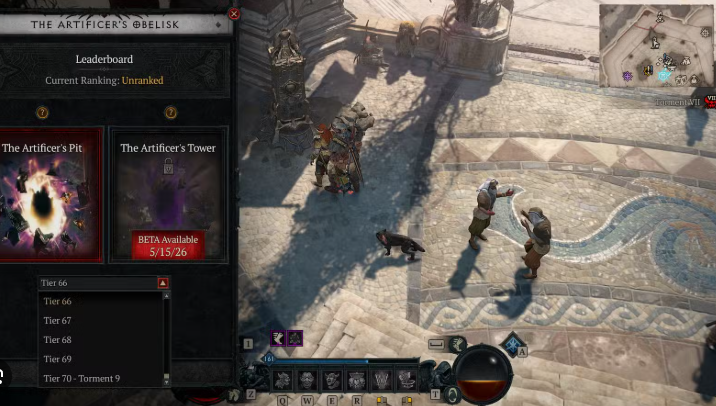
Once completed, you gain access to The Pit via the Artificer’s Obelisk in Cerrigar, Scosglen.

After your first completed run, the full tier system becomes available.

How Artificer Tiers Work

Once unlocked, The Pit opens a scalable tier system ranging from low entry levels up to extremely high-end challenges.

Core Rules:

Each run follows a simple loop:

1. Enter The Pit using Runeshards

2. Kill enemies to fill the progress bar

3. Spawn and defeat the dungeon boss

4. Complete run within the time limit

If you succeed, you unlock higher tiers.

How to Unlock Higher Artificer Tiers

Progression is based entirely on performance.

The faster you complete a tier, the more tiers you can unlock at once:

·Fast clear (high remaining time) → unlock multiple tiers

·Moderate clear → unlock 1-2 tiers

·Slow clear → unlock only next tier

This system rewards optimized builds and strong Diablo 4 Items setups that clear efficiently instead of slowly surviving.

You do NOT need to replay every tier individually; skipping tiers is part of normal progression if you perform well.

Why You Need Artificer Tiers for Endgame

Artificer Tiers are not just optional content-they are a gateway to Diablo 4’s strongest progression systems.

Key Rewards:

·Masterworking materials

·High-tier Legendary drops

·Greater Affix Diablo 4 Items

·Endgame crafting resources

The Pit is the only reliable source of Masterworking materials, making it mandatory for competitive endgame builds.

Without progressing Artificer Tiers, your gear will eventually hit a power ceiling.

Best Strategies to Push Artificer Tiers Faster

If you want to climb efficiently, your build and farming strategy matter more than anything.

1. Optimize Your Build for Speed

High-tier pushing requires:

·Strong AoE damage

·Fast mobility

·Efficient resource generation

·Strong boss damage

Slow builds may struggle even if they are tanky.

2. Prioritize Diablo 4 Items With Synergy

Your Diablo 4 Items should focus on:

·Cooldown reduction

·Critical Strike scaling

·Vulnerable damage

·Resource efficiency

·Survivability layers

Well-rolled gear dramatically increases tier progression speed.

3. Don’t Over-Upgrade Too Early

Many players waste resources upgrading low-tier gear.

Instead:

·Wait for Ancestral or high-end drops

·Focus on Greater Affixes

·Only invest in long-term items

This ensures efficient progression through higher tiers.

4. Farm Efficient Gold for Crafting

Endgame progression is heavily tied to crafting costs.

Many players choose to buy Diablo IV gold to support:

·Masterworking upgrades

·Enchant rerolls

·Gear optimization

·High-tier crafting loops

Gold becomes a major bottleneck once you reach higher Artificer Tiers.

Common Mistakes When Unlocking Artificer Tiers

Avoid these common issues:

·Entering the Pit too early without optimized gear

·Ignoring damage scaling in favor of pure defense

·Not upgrading key Diablo 4 Items before pushing tiers

·Farming too slowly instead of efficiently

·Wasting Runeshards on weak builds

Efficiency matters more than raw survivability in most cases.

Final Thoughts

Artificer Tiers in Diablo 4 represent the backbone of endgame progression through The Pit of the Artificers. Unlocking them is a major milestone that signals your transition into true high-end content.
Why Is Diablo 4 a Success?

Why Is Diablo 4 a Success?

Blizzard Entertainment’s Diablo 4 Gold has become one of the most successful entries in the Diablo series since its release. Released in June 2023, it quickly captivated both long-time fans of the franchise and newcomers alike. Diablo 4 managed to overcome challenges, evolve the series’ formula, and offer a product that not only delivered on the core aspects that fans loved but also innovated in ways that appealed to a modern gaming audience. This success can be attributed to several key factors, ranging from the game’s design choices to its implementation of modern technology and its connection to the community. In this article, we will explore why Diablo 4 has been such a success, touching on gameplay innovations, storytelling, and Blizzard’s approach to balancing nostalgia with new ideas.

1. Familiarity and Nostalgia

First and foremost, Diablo 4 owes much of its success to its deep roots in the series’ legacy. The Diablo franchise, since its inception in 1996, has been defined by its dark atmosphere, addictive loot-based progression system, and visceral combat mechanics. For long-time fans, Diablo 4 feels like a return to the core essence of the franchise, especially after the divisive reception of Diablo 3 at launch.

Diablo 3 faced criticism for its heavily streamlined mechanics, particularly with its focus on accessibility and the controversial Auction House, which undermined the game’s loot progression. In contrast, Diablo 4 deliberately hearkens back to the darker tone and atmosphere of the earlier games, most notably Diablo 2. This includes a more open world, a darker, gothic aesthetic, and the return of classic features such as runes, charms, and a much more substantial focus on character customization through skill trees. The graphics and overall presentation were also meticulously designed to create a dark and immersive experience, recalling the gritty, demonic world of Sanctuary.

By providing players with a feeling of nostalgia while not feeling overly reliant on it, Diablo 4 was able to appease veterans while also drawing in a new generation of gamers who were eager to experience the franchise’s iconic blend of dungeon-crawling, loot farming, and action-packed combat.

2. Innovative and Engaging Gameplay

While Diablo 4’s roots are firmly planted in the franchise’s history, it is not afraid to innovate and evolve. This evolution can be seen in several key areas:

Open World Design

One of the most significant shifts from previous entries in the series is the introduction of an open world. Diablo 4 moves away from the traditional linear act-based structure of previous games, instead offering a vast, interconnected map full of dungeons, side quests, and points of interest. This world is designed for both solo and cooperative play, and the game encourages exploration, fostering a sense of freedom and discovery.

The open-world design also brings dynamic events into the game. World Events and player-driven invasions introduce a level of unpredictability and community-driven interaction that was not as pronounced in earlier Diablo games. This sense of shared experience, where players can encounter each other in random events or even help in large-scale world events, was a significant enhancement.

Combat System

The combat system is another area where Diablo 4 shines. It retains the core hack-and-slash mechanics that the franchise is known for, but it introduces more depth and strategy. The addition of advanced skill trees for each class, coupled with the ability to experiment with different builds, allows for a much higher degree of customization and personal playstyle. Players are encouraged to create unique character builds and fine-tune their playstyle as they progress, experimenting with different skill synergies.

The fluidity of combat is another strength. The design of Diablo 4 offers satisfying action without compromising depth. The introduction of more advanced dodge mechanics, ranged combat, and the ability to combo skills opens up a variety of strategies for dealing with different enemies. It’s fast-paced yet precise, making each combat encounter feel rewarding.

Co-op and Multiplayer

One of the highlights of Diablo 4 is its deep integration of multiplayer elements, particularly in its online co-op. The game enables both solo and cooperative play, allowing players to group up in parties to tackle the game’s tougher challenges, including boss battles, world events, and PvP zones. The integration of online features, such as shared events, an in-game marketplace, and player-versus-player zones, creates a thriving multiplayer experience that encourages cooperation while also fostering friendly competition. This is an aspect that Diablo 3 had, but Diablo 4 executes it much more effectively by ensuring that the co-op experience is just as enjoyable as playing solo.

3. Narrative Depth and Storytelling

Another major success of Diablo 4 lies in its narrative structure and storytelling. The game introduces players to a darker, more mature story centered around the return of the demonic entity, Lilith, and the horrors that follow in her wake. This story is deeply woven into the game’s world, providing context for the character’s actions and the enemies they encounter.

The writing in Diablo 4 is much more refined compared to Diablo 3, offering a more complex and nuanced narrative. The personal stakes of the characters are well-executed, and the overarching story serves to motivate players to progress through the game’s challenges. Blizzard’s decision to tone down the comedic and often over-the-top elements present in Diablo 3 and instead focus on a more somber and serious plot paid off well, creating an atmosphere that resonates with the series’ long-time fans. The incorporation of cinematic sequences, lore, and well-developed NPCs helps immerse players further into the world of Sanctuary, making the stakes feel real and personal.

4. Loot System and Progression

A major reason for the success of any Diablo game is its loot system, and Diablo 4 does not disappoint. The game’s loot system is addictive and satisfying, built upon the foundational philosophy that players are constantly rewarded with better and more interesting items as they progress. Unlike the divisive Auction House of Diablo 3, Diablo 4 features a more traditional loot progression system, where players can find powerful items, upgrade them, and trade them with others.

The depth of the loot system is also notable. Each piece of gear offers meaningful bonuses and may come with special affixes, attributes, or even unique effects, making the process of finding better gear both rewarding and exciting. This loot-based progression system is deeply tied into the game’s core loop, offering players constant progression while making the moments of discovery feel like a genuine reward. The game also introduces legendary and unique items that provide opportunities for game-changing builds, a feature beloved by many Diablo fans.

5. Post-Launch Support and Community Engagement

Blizzard’s commitment to post-launch support is another major factor in Diablo 4’s success. The developers have shown a strong commitment to ensuring the game remains fresh through regular updates, seasonal content, and fixes based on community feedback. Early on, players voiced concerns about balance issues, difficulty spikes, and various bugs. Blizzard responded quickly, fixing many of these issues and even tweaking the game’s difficulty level to better accommodate a wide range of players.

In addition, Diablo 4 continues to thrive through its seasonal content updates, which introduce new features, challenges, and lore on a regular basis. This commitment to keeping the game fresh ensures that players remain engaged, giving them a reason to come back for more even after completing the main story.

6. Technical and Visual Excellence

Finally, it’s important to highlight the technical and visual aspects of buy Diablo IV Items. The game’s engine is highly optimized, providing stunning visuals that manage to balance a dark and gritty aesthetic with smooth, engaging gameplay. The detailed environments, dynamic lighting, and atmospheric effects all contribute to creating a world that feels alive and immersive.

The game runs well across a variety of hardware setups, from high-end gaming PCs to consoles, ensuring that a broad range of players can enjoy the experience without issues. Additionally, the music and sound design are exceptional, adding to the overall sense of immersion and tension.

Conclusion

In conclusion, Diablo 4 is a success due to a combination of factors, including its return to the franchise’s roots, its innovative gameplay features, its engaging narrative, and its attention to the community. Blizzard’s ability to evolve the series while maintaining the core elements that made it successful in the first place has resonated with both old and new players alike. The seamless integration of multiplayer elements, compelling loot progression, and stunning visuals further cement Diablo 4 as one of the best action RPGs of the decade. With continued post-launch support, Diablo 4 has not only revitalized the franchise but set a high bar for future entries in the genre.