Diablo 4: How Artificer Tiers Work

Diablo 4: How Artificer Tiers Work

The Artificer Tiers in Diablo 4 represent one of the most important endgame progression systems introduced through The Pit of the Artificers. If you want to push high-end content, farm top-tier Diablo 4 Items, or unlock Masterworking upgrades, understanding how Artificer Tiers work is essential.

These tiers function like a scaling difficulty ladder inside The Pit, where each cleared level increases challenge and rewards. The higher you climb, the more powerful materials, gear, and progression systems you unlock, making it a core part of endgame optimization in Season 13.

This guide explains exactly how to unlock Artificer Tiers, how progression works, and how to push higher efficiently.

What Are Artificer Tiers in Diablo 4?

Artificer Tiers are the difficulty levels inside The Pit of the Artificers, a timed endgame dungeon introduced in Season 4 and expanded in later updates. Each tier increases enemy level, density, and boss difficulty while improving rewards.

The system is essentially Diablo 4’s equivalent of scaling endgame rifts:

·Higher tier = harder enemies

·Higher tier = better loot

·Higher tier = more Masterworking materials

·Higher tier = stronger Diablo 4 Item drops

Players use this system to test build strength and optimize endgame farming efficiency.

How to Unlock The Pit (Required for Artificer Tiers)

Before you can access Artificer Tiers, you must first unlock The Pit itself.

Unlock Requirements:

You generally need to:

·Reach max-level endgame (typically Level 60 in modern systems)

·Unlock World Tier IV (Torment difficulty)

·Complete a high-tier Nightmare Dungeon

·Obtain Runeshards or Artificer’s Stones

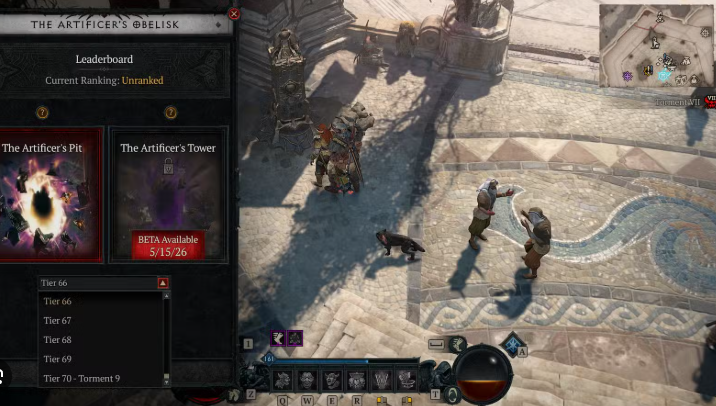
Once completed, you gain access to The Pit via the Artificer’s Obelisk in Cerrigar, Scosglen.

After your first completed run, the full tier system becomes available.

How Artificer Tiers Work

Once unlocked, The Pit opens a scalable tier system ranging from low entry levels up to extremely high-end challenges.

Core Rules:

Each run follows a simple loop:

1. Enter The Pit using Runeshards

2. Kill enemies to fill the progress bar

3. Spawn and defeat the dungeon boss

4. Complete run within the time limit

If you succeed, you unlock higher tiers.

How to Unlock Higher Artificer Tiers

Progression is based entirely on performance.

The faster you complete a tier, the more tiers you can unlock at once:

·Fast clear (high remaining time) → unlock multiple tiers

·Moderate clear → unlock 1-2 tiers

·Slow clear → unlock only next tier

This system rewards optimized builds and strong Diablo 4 Items setups that clear efficiently instead of slowly surviving.

You do NOT need to replay every tier individually; skipping tiers is part of normal progression if you perform well.

Why You Need Artificer Tiers for Endgame

Artificer Tiers are not just optional content-they are a gateway to Diablo 4’s strongest progression systems.

Key Rewards:

·Masterworking materials

·High-tier Legendary drops

·Greater Affix Diablo 4 Items

·Endgame crafting resources

The Pit is the only reliable source of Masterworking materials, making it mandatory for competitive endgame builds.

Without progressing Artificer Tiers, your gear will eventually hit a power ceiling.

Best Strategies to Push Artificer Tiers Faster

If you want to climb efficiently, your build and farming strategy matter more than anything.

1. Optimize Your Build for Speed

High-tier pushing requires:

·Strong AoE damage

·Fast mobility

·Efficient resource generation

·Strong boss damage

Slow builds may struggle even if they are tanky.

2. Prioritize Diablo 4 Items With Synergy

Your Diablo 4 Items should focus on:

·Cooldown reduction

·Critical Strike scaling

·Vulnerable damage

·Resource efficiency

·Survivability layers

Well-rolled gear dramatically increases tier progression speed.

3. Don’t Over-Upgrade Too Early

Many players waste resources upgrading low-tier gear.

Instead:

·Wait for Ancestral or high-end drops

·Focus on Greater Affixes

·Only invest in long-term items

This ensures efficient progression through higher tiers.

4. Farm Efficient Gold for Crafting

Endgame progression is heavily tied to crafting costs.

Many players choose to buy Diablo IV gold to support:

·Masterworking upgrades

·Enchant rerolls

·Gear optimization

·High-tier crafting loops

Gold becomes a major bottleneck once you reach higher Artificer Tiers.

Common Mistakes When Unlocking Artificer Tiers

Avoid these common issues:

·Entering the Pit too early without optimized gear

·Ignoring damage scaling in favor of pure defense

·Not upgrading key Diablo 4 Items before pushing tiers

·Farming too slowly instead of efficiently

·Wasting Runeshards on weak builds

Efficiency matters more than raw survivability in most cases.

Final Thoughts

Artificer Tiers in Diablo 4 represent the backbone of endgame progression through The Pit of the Artificers. Unlocking them is a major milestone that signals your transition into true high-end content.


Diablo 4: How to Gear Your Character for Success

Diablo 4: How to Gear Your Character for Success

Gearing your character in Diablo 4 is more than just equipping the highest-item-level gear you find-it’s about strategic choices that align with your build, prioritize key stats, and adapt to every game phase. From the early campaign to endgame torment tiers, your gear determines whether you crush demons effortlessly or struggle to survive. This guide breaks down the essential steps to gear your character effectively, no matter your class or playstyle.

1. Understand the Basics: Gear Rarity and Item Power

Before diving into specific stats, you need to grasp the foundation of Diablo 4’s gear system: rarity and item power. Gear ranges from Common (white) to Unique (gold), with each tier offering more affixes (stats) and potential strength.

Common and Magic (blue) gear are only useful in the early campaign (levels 1–20). Rare (yellow) gear unlocks three to four affixes and becomes your mainstay until you start finding Legendary (orange) items around level 30. Legendary gear adds a powerful Aspect-unique effects that can define your build-alongside four affixes.

Diablo 4 Items Power (IP) is equally critical. It dictates the minimum and maximum values of an item’s affixes. A level 70 item with 800 IP will always outperform a level 70 item with 700 IP, even if the rarity is the same. Prioritize item power first, then affixes and Aspect.

2. Prioritize Build-Specific Affixes

The most common mistake players make is equipping gear with random high stats instead of focusing on affixes that complement their build. Every class and build has non-negotiable stats-here’s how to identify them.

Offensive builds (e.g., Whirlwind Barbarian, Fire Sorcerer) should prioritize damage-boosting affixes: Vulnerable Damage, Critical Strike Chance/Damage, Skill Damage (e.g., “Whirlwind Damage”), and Core Stat Scaling (Strength for Barbarians, Intelligence for Sorcerers). These stats multiply your damage output far more than flat damage bonuses.

Defensive builds (e.g., Bone Golem Necromancer, Werebear Druid) need survival-focused affixes: Maximum Life, Armor, All Resistances, Damage Reduction (especially from Close/Remote Enemies), and Heal on Kill. For endgame, aim for 2500+ Armor and 75%+ All Resistances to handle Torment tiers.

Class-specific nuances matter too. Rogues rely on Dexterity for Skill Damage and Critical Strike Chance, while Necromancers benefit from Willpower for Minion Damage and Resource Generation. Always check your build’s core mechanics-if you’re playing a Minion Necromancer, prioritize Minion Damage over personal Critical Strike.

3. Master Aspects: The Key to Build Synergy

Legendary Aspects are the backbone of any powerful build. These unique effects can turn a mediocre setup into a devastating one-for example, the “Rend Aspect” for Barbarians makes Rend deal damage over time to multiple enemies, while the “Chain Lightning Aspect” for Sorcerers lets lightning jump to additional targets.

You can extract Aspects from Legendary gear at the Occultist and imprint them onto Rare or Legendary items. Focus on imprinting Aspects that directly enhance your core skills. For a Sorcerer using Chain Lightning, the “Chain Lightning Aspect” is non-negotiable-even if the item has lower IP than another option.

Season 11 updates have improved Aspect flexibility, with the Masterworking system allowing you to refine affixes alongside Aspects. Don’t waste resources imprinting niche Aspects; stick to those that align with your build’s primary damage source (e.g., Overpower, Critical, Vulnerable).

4. Efficient Gear Farming: Stop Wasting Time

Farming gear efficiently is crucial-grinding random mobs won’t get you far. Focus on activities that guarantee high-quality loot, especially once you reach level 50 and unlock World Tier 3 (Nightmare) and 4 (Torment).

Hell Tides are the best target-farming method. These events spawn in World Tier 3+ and drop Aberrant Cinders, which you can exchange for Tortured Chests that target specific gear slots (e.g., gloves, weapons, jewelry). Prioritize killing Elites for more Cinders, and save your Cinders for the slots you need most.

Nightmare Dungeons offer guaranteed Legendaries per clear, along with XP and materials for Masterworking. Skip unnecessary mobs and focus on the objective to maximize efficiency. The Tree of Whispers provides consistent but random Legendary caches, making it a solid secondary farming option.

For endgame players, Murmuring Obols (earned from World Events and Dungeons) let you gamble for specific gear slots at the Purveyor of Curiosities. Gamble on slots where you’re missing key affixes-this is often faster than farming for exact items.

5. Masterworking and Crafting: Refine Your Gear

Once you have a solid base of Legendary or Unique gear, use Masterworking and Crafting to refine it. Masterworking, overhauled in Season 10, upgrades an item’s quality (up to 20%) and adds powerful Greater Affixes that can be rerolled for a cost.

The Masterworking process has two phases: first, upgrade the item’s base stat (damage for weapons, armor forarmor, resistance for jewelry) to 20% quality. Then, unlock the Masterworking Capstone to add a Greater Affix, which can be rerolled with materials like Obducite and Forgotten Souls.

Enchanting at the Occultist lets you reroll one affix per item, allowing you to fix imperfect gear. Use Selective or Perfect Enchant (if you have the materials) to target specific affixes-this is especially useful for high-IP items with one bad stat.

Tempering is another key crafting system, letting you add or modify affixes from the Codex. For endgame gear, use Selective Temper to pick exact affixes that complement your build, and save Perfect Temper for your most important items.

6. Endgame Gearing: Chase Ancestral and Unique Gear

In Torment (World Tier 4), your goal is to farm Ancestral Legendary and Unique gear. Ancestral items have higher IP caps and better affix rolls, and they can be Masterworked up to 12 times-with ranks 4, 8, and 12 giving a 25% boost to a random affix.

Uniques are build-defining, but not all are useful. Some Uniques (e.g., those that change skill mechanics) are game-changing, while others are underwhelming. Always compare a Unique to your current Legendary-if the Unique’s effect doesn’t align with your build, stick with the Legendary with better affixes.

For DLC owners, the Kurast Dungeons let you customize loot by offering Tribute, increasing your chances of getting Ancestral or high-quality Unique gear. Target World Bosses like Astaroth or Bartuc for rare materials needed for Masterworking and high-end crafting.

Final Tips for Gearing Success

Gearing in Diablo 4 is a process, not a one-time task. Don’t fixate on “perfect” gear early-focus on progression. In the campaign, any gear that boosts your core stats will work; save resources for endgame.

Use the in-game settings to show affix roll ranges, so you can identify high-roll items. Salvage unwanted gear for cheap Diablo 4 materials, and trade unenchanted Legendaries (if allowed) to get missing pieces.

Finally, adapt your gear to the content you’re playing. If you’re struggling with survival in Nightmare Dungeons, swap out one offensive affix for a defensive one. If you’re farming Elites, prioritize Area of Effect (AoE) damage. Gearing is about balance-find what works for your playstyle, and refine it as you progress.

With these steps, you’ll turn your character from a demon-fighting novice into a force to be reckoned with. Remember: the best gear isn’t the highest IP-it’s the gear that works in harmony with your build.

Diablo 4: Guide to Renown

Diablo 4: Guide to Renown

In Diablo 4, Renown serves as a crucial system that rewards players for exploring, completing challenges, and progressing through the game world. Unlike many other RPG systems that focus primarily on combat, Renown highlights the importance of exploration, interaction with the world, and the completion of various objectives spread across Sanctuary. This guide will delve into what Renown is, how to maximize its benefits, and why it’s worth investing time into unlocking its rewards.

What Is Renown?

Renown is a progression system tied directly to the exploration of Diablo 4’s vast open world. Every region within the game has its own Renown track, and as you complete specific activities and objectives in these areas, your Renown increases. These activities range from story missions, side quests, and objectives tied to dungeons and world events. Renown is a core mechanic in Diablo 4 because it unlocks a variety of rewards that can make your journey smoother, from unlocking new skills to gaining Diablo 4 Items.

The Renown system is divided into multiple levels, and each level grants a set of rewards. The more Renown you gain in a region, the better the rewards you will receive, but also the more engaged you will become with that region’s lore and activities.

How Renown Is Earned

Renown is earned through completing a variety of tasks across each region of the world. These tasks include:

Story Progression: Completing the main storyline in any given region will grant a chunk of Renown. As you advance through the game’s main quests, you naturally increase your Renown for each area you travel through.

Side Quests: These are optional objectives scattered throughout the map. They vary in difficulty and complexity but are a reliable way to grind Renown. The side quests can also help you learn more about the world of Sanctuary and its inhabitants, adding depth to your experience.

World Events: These are dynamic events that appear at random throughout the game world. They can range from defending a village from hordes of monsters to battling powerful bosses. Completing these events will reward you with Renown and can provide valuable loot.

Altars of Lilith: Found across the map, these collectible items are part of the world-building in Diablo 4. Each Altar you find and activate gives you Renown, as well as bonus attribute points that can be used to increase your character’s stats.

Dungeons: Exploring and completing dungeons is an essential activity in Diablo 4, and it contributes to your Renown progression. Every dungeon you finish, especially those tied to specific regions, will reward you with Renown points.

Region Objectives: Each region has its own specific objectives, such as clearing out monster dens, rescuing prisoners, or assisting NPCs in various ways. Completing these region-specific tasks will yield Renown points and sometimes even additional perks like increased resistance or additional experience gains.

Renown Rewards

As you increase your Renown in each region, you unlock a variety of rewards that can help you along your journey. Some of the key rewards include:

Skill Points: One of the most valuable rewards you can earn from Renown progression are skill points. These points can be spent on your character’s skill tree to enhance their abilities, making you more effective in combat. By focusing on Renown, players can significantly strengthen their characters without relying solely on combat-related activities.

Paragon Points: Once you reach level 50 and begin your Paragon progression, Renown rewards can also help you gain Paragon points. These points can be used to further customize your character’s build, giving you access to powerful abilities that can influence your gameplay style.

Increased Stash Space: Renown also rewards players with increased stash space, which is essential for hoarding the vast amounts of loot Diablo 4 is known for. Expanding your stash allows for more storage options, which is a crucial part of keeping your inventory organized as you amass gear.

Currency and Items: As you level up your Renown, you will earn various forms of in-game currency, including gold and items such as potions, consumables, and even rare crafting materials. These can be used to upgrade gear, re-roll stats, or trade with NPCs and other players in the game’s economy.

Titles and Cosmetic Rewards: Renown also provides players with aesthetic rewards, such as unique titles and cosmetics. These are largely for personalization and for showing off your achievements to other players. Titles in particular are a popular way to flex your progress and dedication to the game.

Strategies for Maximizing Renown

While the Renown system in Diablo 4 is largely tied to natural gameplay progression, there are ways to optimize your Renown farming to ensure that you’re earning as many rewards as possible without feeling like you’re wasting time. Here are some tips for efficiently leveling up your Renown:

Focus on One Region at a Time: When starting a new region, prioritize completing all of the available tasks within that region before moving on to a different area. This will help you maximize the Renown rewards for that specific region. Additionally, completing all objectives in a region will give you a deeper understanding of its lore and increase your attachment to the storylines.

Take Advantage of Events: World events are a great way to earn Renown quickly. These events often have a time-sensitive nature and are easy to participate in, even for lower-level players. If you spot a world event near you, take advantage of it to gain extra Renown while you’re exploring or working on other tasks.

Map Out Altars of Lilith: Since the Altars of Lilith provide both Renown and permanent stat boosts, it’s worthwhile to actively seek them out while you’re exploring the world. Mapping out their locations and completing them as you explore a region will allow you to maximize your Renown per hour of gameplay.

Multitask with Side Quests and Dungeons: Don’t treat side quests and dungeons as separate tasks. Many of these will be located near each other or can be done concurrently. For example, a side quest might lead you straight to a dungeon entrance, allowing you to complete both in one go. Combining these activities can drastically cut down the time it takes to increase Renown in a given area.

Play with Friends: Diablo 4 is a cooperative game, and teaming up with friends or other players can make Renown farming faster. Group play allows you to tackle more difficult events, clear dungeons faster, and access higher-level content that may not be manageable alone.

The Importance of Renown for Endgame Content

While Renown is valuable throughout the entire game, its importance grows as you approach the endgame. The rewards that come from Renown—particularly the extra skill points, Paragon points, and stash space—become incredibly valuable when your character reaches high levels and begins to tackle tougher content. Maximizing Renown early on sets you up for success when you start to engage with Diablo 4’s hardest dungeons, world bosses, and PvP modes.

Additionally, completing Renown progression in all regions gives you a sense of accomplishment and helps you unlock all of the potential gameplay features the game has to offer. Whether you want to dive into crafting, min-max your character, or simply experience everything Diablo 4 has to offer, Renown is an essential system to engage with.

Conclusion

Renown in Diablo 4 is much more than just an experience point system. It’s a dynamic feature that rewards exploration, interaction, and engagement with the world of Sanctuary. By taking the time to increase your Renown, you’ll not only improve your character’s power but also gain access to essential resources that make your journey through the game more fulfilling and enjoyable.

Maximizing Renown requires strategic thinking and efficient time management, but the rewards are well worth the effort. Whether you’re hunting for cheap Diablo 4 materials, enhancing your character’s abilities, or simply enjoying the immersive world-building that Diablo 4 offers, Renown ensures that every moment you spend in the game counts.

Diablo 4: Sorcerer Enchantments Guide

Diablo 4: Sorcerer Enchantments Guide

In Diablo 4, the Sorcerer class is one of the most dynamic and exciting characters to play, blending devastating elemental magic with a variety of specialized enchantments that enhance their powers. Sorcerer enchantments are a critical part of your gameplay, offering significant advantages to both damage output and survivability. In this comprehensive guide, we will explore how Sorcerer enchantments work, how to unlock them, and how to maximize their effectiveness in your journey through the dark and dangerous world of Sanctuary.

Understanding Sorcerer Enchantments in Diablo 4

Enchantments in Diablo 4 Items are powerful passive abilities that the Sorcerer can unlock as they progress through the game. These enchantments are essentially magical effects that are tied to the Sorcerer’s elemental mastery, allowing players to alter their playstyle and create more versatile and potent builds. Enchantments grant both active and passive bonuses that modify various aspects of combat, such as elemental damage, defense, and control over magical forces.

While Sorcerers have access to a variety of spells that tap into the core elements—fire, ice, and lightning—the enchantments introduce an extra layer of complexity and customization. These passive effects can be chosen based on the player’s preferred combat style, whether they want to deal massive damage, control enemies, or boost their survivability.

How to Unlock Sorcerer Enchantments

To unlock enchantments, you must first progress through the main storyline, particularly in the Sorcerer class questlines. Once you reach certain milestones in your progression, you’ll gain access to the enchantment system. Sorcerer enchantments become available after reaching Level 20, at which point you’ll be introduced to the Enchantment Tree.

The Enchantment Tree is a talent grid where players can choose which enchantments to unlock. Some enchantments are locked behind story progression, while others are earned by completing specific quests or challenges. As you level up, you’ll gain Enchantment Points that you can spend to unlock new enchantments or enhance existing ones. These enchantment points are key to customizing your character’s abilities.

Each of the Sorcerer’s three core elemental schools—Fire, Ice, and Lightning—has its own set of enchantments, as well as some universal enchantments that benefit all schools of magic. To get the most out of your Sorcerer build, it’s important to choose enchantments that complement your playstyle and goals.

Types of Sorcerer Enchantments

There are a variety of Sorcerer enchantments that span across different elemental schools, each designed to enhance specific aspects of your magical power. Below are some of the major categories and examples of Sorcerer enchantments:

Fire Enchantments

Fire enchantments are designed to enhance the Sorcerer’s ability to deal explosive and sustained damage over time. Fire is one of the most offensive elements in Diablo 4, and these enchantments reflect that. Here are some examples:

Inferno’s Wrath

This enchantment increases the damage of your fire-based spells, boosting their effectiveness significantly. It makes spells like Fireball, Flame Wave, and Meteor far more deadly, especially when fighting groups of enemies or bosses.

Effect: Fire spells deal 30% more damage and have a 10% chance to ignite enemies on impact.

Blazing Fury

With this enchantment, you gain a chance to unleash a secondary fire explosion after casting a fire spell. This explosion can deal devastating area damage and spread chaos across the battlefield.

Effect: After casting a fire spell, 25% chance for a secondary fire explosion that deals 50% of the original spell’s damage in a 10-yard radius.

Fiery Resilience

This defensive enchantment grants you increased resistance to incoming fire damage and enhances your ability to mitigate fire-based attacks from enemies.

Effect: Reduces incoming fire damage by 20%, and increases fire resistance by an additional 10%.

Ice Enchantments

Ice enchantments focus on crowd control, slowing down enemies and reducing their ability to overwhelm you. These enchantments can greatly aid in survivability, giving you time to deal damage or retreat.

Glacial Shield

This enchantment creates an ice shield around you that absorbs incoming damage. It’s particularly effective in the heat of battle, providing a temporary barrier when enemies get too close.

Effect: When you cast an Ice spell, create an ice shield that absorbs 30% of incoming damage for 5 seconds.

Frozen Touch

With Frozen Touch, you increase the chance of freezing enemies when they are hit by ice spells. This enchantment is especially useful for freezing large groups of enemies and controlling the battlefield.

Effect: Ice spells have a 20% chance to freeze enemies for 3 seconds. A frozen enemy takes 10% more damage from all sources.

Winter’s Embrace

This enchantment provides a boost to your survivability by reducing the effectiveness of enemy movement and attack speed when they are affected by your ice spells.

Effect: Enemies hit by your ice spells have their movement and attack speed reduced by 15% for 6 seconds.

Lightning Enchantments

Lightning enchantments enhance the Sorcerer’s mobility and burst damage, as well as providing strong utility effects. These enchantments make you a high-speed, high-damage dealer who can react quickly to changes in the battlefield.

Storm’s Fury

This enchantment increases the damage output of lightning spells and gives a chance for lightning bolts to chain to nearby enemies, making it ideal for clearing groups of monsters.

Effect: Lightning spells deal 30% more damage. Lightning strikes have a 25% chance to chain to up to 2 additional enemies within 10 yards.

Electrified Aura

Electrified Aura is a powerful enchantment that boosts your movement speed while also dealing periodic lightning damage to any nearby enemies.

Effect: Grants a 15% increase in movement speed and deals lightning damage every second to enemies within a 5-yard radius.

Static Barrier

This enchantment creates a static barrier that damages enemies who come into contact with it. It’s a great way to protect yourself when fighting melee enemies or holding your ground in tough situations.

Effect: Creates a barrier around you that deals lightning damage to enemies in melee range, reducing their damage output by 10% for 5 seconds.

Universal Enchantments

These enchantments affect all elemental schools, making them suitable for any Sorcerer build. They provide enhancements that benefit the overall power and versatility of the character.

Mana Surge

Mana Surge helps Sorcerers maintain a constant flow of mana, which is essential for sustaining high-powered spell casts. This enchantment provides a bonus to mana regeneration and reduces mana costs for spells.

Effect: Increases mana regeneration by 15% and reduces mana cost for spells by 10%.

Arcane Mastery

This enchantment increases the overall effectiveness of all magical attacks, regardless of the element used. If you want a Sorcerer build that blends multiple elements, Arcane Mastery will synergize well with all spell types.

Effect: Increases all spell damage by 10% and grants an additional 5% chance to crit with all elemental spells.

How to Maximize Sorcerer Enchantments

To make the most of your Sorcerer enchantments, you should carefully plan your enchantment selections based on your playstyle and the challenges you face in Diablo 4. Here are some tips for maximizing the impact of your enchantments:

Synergize with Your Skills: Choose enchantments that complement your preferred abilities. For example, if you focus on Fireball or Meteor, picking up Inferno’s Wrath will significantly increase your damage output. Similarly, if you favor Ice Shield or Frost Nova, Glacial Shield and Frozen Touch can keep enemies at bay and improve your survivability.

Balance Offense and Defense: While fire and lightning enchantments tend to focus on offense, ice enchantments provide much-needed defensive benefits. Mixing and matching offensive and defensive enchantments will give you the flexibility to adapt to various scenarios.

Elemental Focus: If you’re playing a build focused on a particular element, consider stacking enchantments from that element’s school. Fire builds can greatly benefit from Blazing Fury and Fiery Resilience, while Frozen Touch and Winter’s Embrace are great for pure ice builds.

Experiment with Playstyle: Don’t be afraid to experiment with different combinations of enchantments to find the one that fits your preferred playstyle. Some players might prefer high mobility, while others may lean toward tanking or maximizing burst damage.

Conclusion

Sorcerer enchantments are an essential part of cheap Diablo 4 materials, allowing players to fine-tune their character to suit any playstyle. Whether you want to dominate enemies with fire, freeze them in place with ice, or zap them with lightning, the enchantment system offers endless customization options. By understanding how to unlock and make the most of these enchantments, you’ll be able to craft a Sorcerer build that is both powerful and versatile, capable of taking on the most formidable enemies in Sanctuary.